Dubai on a Budget 2026: Complete Guide to Save Money
Dubai on a budget sounds like a contradiction. The city is famous for record-breaking towers, seven-star hotels, and the kind of luxury that makes headlines around the world. Yet the reality is that thousands of budget-conscious travellers visit Dubai every single year, enjoy genuinely memorable experiences, and return home without spending anywhere near what most people assume is necessary. The secret lies in knowing where to look, when to go, and how the city actually works beneath its glamorous surface.
This Dubai on a budget guide covers everything a cost-conscious traveller needs in 2026 — from the cheapest time to fly and the best budget accommodation options, to free things to do, affordable food, cheap transport, and a realistic daily budget breakdown that will help you plan your trip with confidence.
Can You Actually Visit Dubai on a Budget?
The honest answer is yes, but with realistic expectations. Dubai on a budget does not mean spending the same as you would in Southeast Asia. It means spending significantly less than the glossy tourist brochures suggest while still accessing the best the city has to offer.Most competitors covering Dubai on a budget focus narrowly on free attractions and cheap food. What they miss is the bigger picture — the best time to visit, how to combine free and paid experiences intelligently, and where the genuine savings are versus where the cheap options simply do not exist. This guide covers all of it.The biggest expenses in Dubai are accommodation, alcohol, and paid attractions. If you manage these three categories smartly, everything else — food, transport, culture, and entertainment — is genuinely affordable.
Best Time to Visit Dubai on a Budget
Timing is the single most powerful lever available to budget travellers visiting Dubai. The same city costs dramatically different amounts depending purely on when you visit.
Visit During Summer for the Deepest Savings
The months of June through September are Dubai’s off-peak season. Temperatures regularly reach 42 degrees Celsius and humidity is high, but the financial rewards for tolerating the heat are significant. Hotel prices in summer drop by 40 to 60 percent compared to peak winter rates. Flights from most origins follow a similar pattern. Budget airlines and full-service carriers alike cut fares substantially during this period.The Dubai Summer Surprises festival runs from June through August and adds shopping discounts on top of already reduced accommodation prices. If your trip is primarily about malls, souks, indoor attractions, and evenings along the waterfront, summer is the most cost-effective time to visit Dubai by a wide margin.
The Dubai Shopping Festival Balances Cost and Weather
The Dubai Shopping Festival runs each year from late December through January. While this is peak tourist season and accommodation prices reflect that, the retail discounts of 25 to 75 percent across malls and souks can offset the higher hotel costs for visitors planning significant shopping. If you book accommodation well in advance and travel on less popular days of the week, visiting during DSF offers a reasonable compromise between weather, atmosphere, and overall value.
Shoulder Season Offers the Best Overall Balance
October, November, and early April sit outside both peak season and the extreme summer heat, delivering the best overall balance for budget travellers. Weather is pleasant, crowds are manageable, and hotel rates sit meaningfully below the December to March peak. This is the period when Dubai on a budget is most achievable without sacrificing weather or atmosphere.
Budget Accommodation in Dubai 2026
Accommodation is typically the largest single expense for budget travellers in Dubai. The good news is that the options have expanded significantly in recent years, and staying cheaply in Dubai no longer means compromising safety or cleanliness.
Hostels in Dubai
Dubai now has a growing hostel scene that simply did not exist a decade ago. Dorm beds in well-reviewed hostels in Deira and Bur Dubai start from AED 60 to AED 100 per night, which is genuinely competitive by any international standard. The Backpacker Hostel in Dubai Marina is one of the few budget options in a premium-location area. Most hostels in Deira and Bur Dubai are within walking distance of metro stations, making transport straightforward.
Budget Hotels in Deira and Bur Dubai
Deira and Bur Dubai are the two neighbourhoods that make Dubai on a budget most achievable for accommodation. Three-star hotels in these areas start from AED 150 to AED 250 per night, and the value at this price point is genuinely good — clean rooms, often breakfast included, and excellent metro access. Deira City Centre Station and BurJuman Station both sit in or adjacent to these areas, giving easy connections to the rest of the city.
Apartment Rentals for Longer Stays
For visits of five nights or more, serviced apartments and short-term rental platforms often deliver better value than hotels in Dubai. Areas like Jumeirah Village Circle, Al Barsha, and Bur Dubai have a wide supply of short-term apartments at prices that undercut comparable hotel rooms while offering kitchen facilities that dramatically cut food costs.
What to Avoid
Budget accommodation in Dubai does not exist in Dubai Marina, Downtown Dubai, or Palm Jumeirah. If a very cheap option appears in these areas, check reviews carefully. The genuinely affordable options cluster in Deira, Bur Dubai, Al Barsha, and JVC, and staying in these areas carries no meaningful disadvantage given the metro connectivity.
Getting Around Dubai on a Budget
Transport is one area where Dubai on a budget is genuinely easy. The public transport system is modern, clean, air-conditioned, and covers most of the major tourist destinations.
The Dubai Metro Is Your Best Friend
The Dubai Metro Red and Green Lines cover the city’s main attractions and shopping destinations at fares between AED 2 and AED 6.50 per journey. A Nol Card, available at any metro station for AED 25 including initial credit, makes travel seamless and provides a 10 percent discount over single-journey ticket prices. The Red Line alone connects Dubai International Airport, Deira City Centre, BurJuman, the Gold Souk area, Downtown Dubai, Mall of the Emirates, Ibn Battuta Mall, and Dubai Marina. For budget travel in Dubai, the metro covers the vast majority of what you need.
The Dubai Tram and Buses
The Dubai Tram runs along the JBR and Marina waterfront and connects to the metro interchange at DMCC Station. It uses the same Nol Card and costs AED 3 per journey. Public buses extend coverage to areas not served by metro, including Jumeirah Beach Road and parts of Deira. The Roads and Transport Authority journey planner app covers all public transport routes in the city.
The Abra — Cheapest and Most Memorable Transport
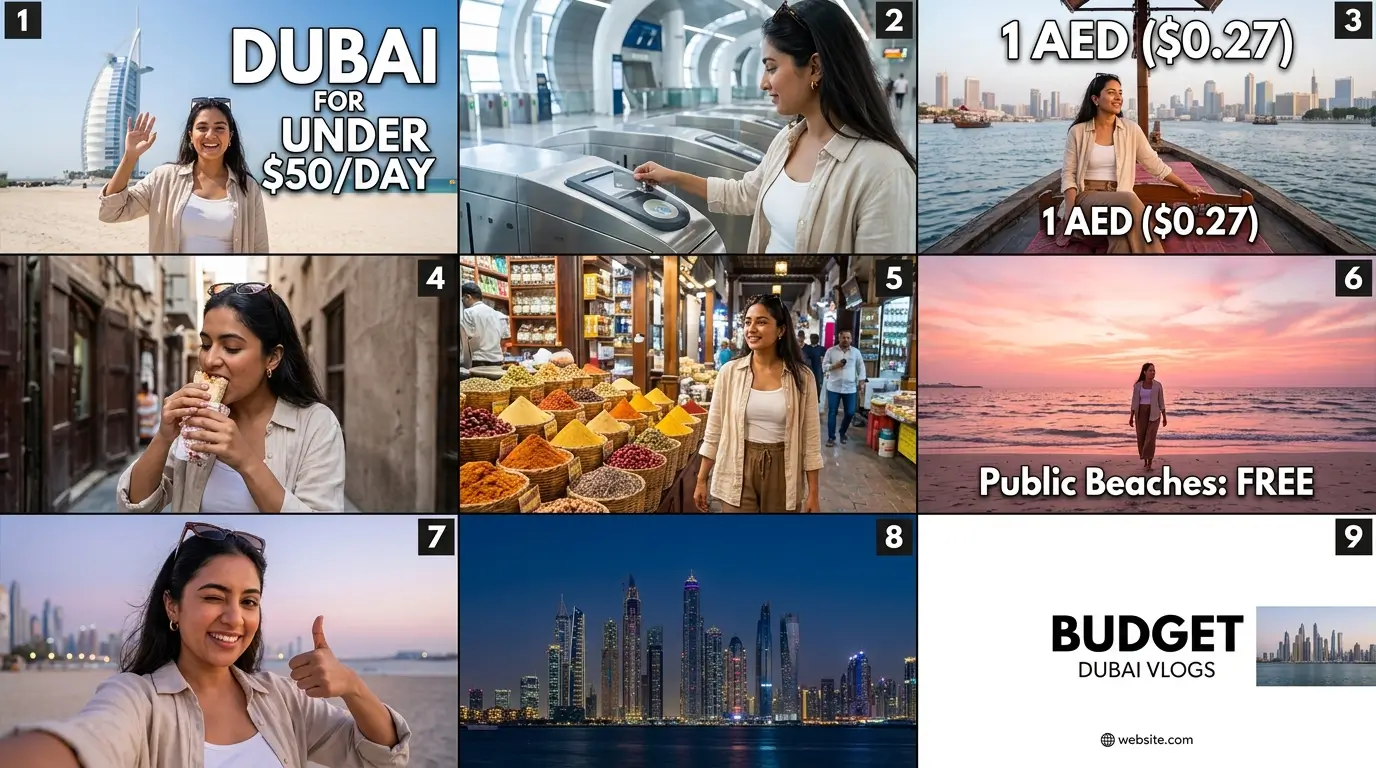
The traditional wooden abra water taxis that cross Dubai Creek between Deira and Bur Dubai cost one dirham per crossing and take approximately five minutes. This is not just the cheapest transport option in Dubai on a budget — it is genuinely one of the most memorable experiences in the city. The Creek abra stations on both sides are central to the Old Dubai souk areas and are worth building into any itinerary.
Taxis and Ride-Hailing
Taxis in Dubai are metered, clean, and honestly priced compared to many global cities. Starting fare is AED 12 (AED 25 from the airport on the flag fall). Careem and Uber operate in Dubai and are often slightly cheaper than metered taxis. For occasional journeys outside the metro network, taxis and ride-hailing are affordable. For daily travel, the metro eliminates the need for them almost entirely.
Free Things to Do in Dubai
This is where Dubai on a budget genuinely surprises most visitors. The city offers a remarkable range of free experiences that most travel guides list superficially. Here is what is actually worth your time and costs nothing.
The Dubai Fountain Show
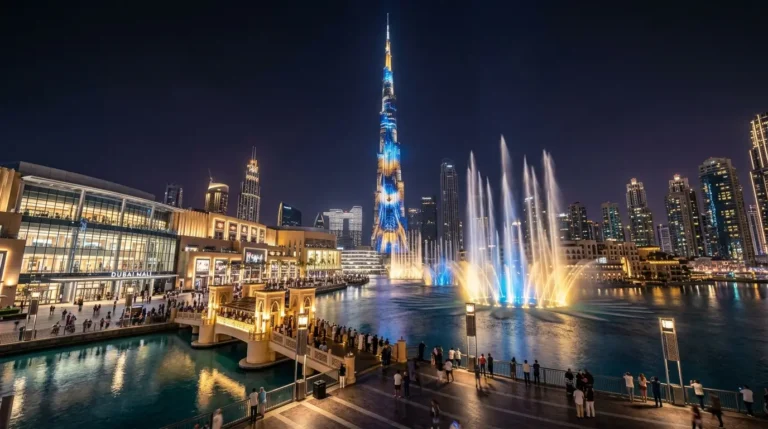
The Dubai Fountain is the world’s largest choreographed fountain system and performs free shows every evening at the base of the Burj Khalifa. Shows run at 6pm and 8pm daily, then every 30 minutes after 8pm on weekends. The viewing area along the Waterfront Promenade at the Dubai Mall is completely free and consistently delivers one of the most spectacular free experiences available in any city in the world. Arrive 15 minutes early to secure a good viewing position.
Dubai Creek and the Old Souk Area
Walking the length of Dubai Creek on either the Deira or Bur Dubai side costs nothing and gives you some of the best atmosphere in the entire city. The Spice Souk, Gold Souk, and Textile Souk are all free to browse. Simply walking through these traditional markets and absorbing the sights, sounds, and smells is a full afternoon of entertainment. The abra crossing for one dirham completes the experience.
Al Fahidi Historical Neighbourhood
The Al Fahidi Historical Neighbourhood in Bur Dubai, also known as Al Bastakiya, is the best-preserved example of pre-modern Dubai architecture in the city. Entry is free. The narrow lanes, wind tower buildings, and courtyard cafes give you a genuine sense of the Dubai that existed before oil and development transformed everything. The Sheikh Mohammed Centre for Cultural Understanding, also located here, offers free cultural programmes on selected days of the week.
Dubai’s Public Beaches
Jumeirah Public Beach, Kite Beach, and Al Mamzar Beach Park offer free or very low-cost beach access in Dubai. Kite Beach has free exercise equipment, outdoor gyms, beach volleyball courts, and a cycling track along the waterfront. Al Mamzar Beach Park charges a small entry fee of AED 5 per person but delivers an uncrowded, family-friendly beach experience with grassed areas and barbecue facilities that is well worth the cost for a full day out.
Dubai Frame Exterior and Zabeel Park
The Dubai Frame itself charges for entry, but the exterior and the surrounding Zabeel Park, which charges a nominal AED 5 entry fee, deliver great views of both Old Dubai and New Dubai skylines for minimal cost. The park is one of the best-value outdoor spaces in the city.
Mall Experiences That Cost Nothing
Both the Dubai Mall and Mall of the Emirates are completely free to enter. Walking through the Dubai Mall and viewing the Dubai Aquarium tunnel from the outside is free. Watching the massive indoor waterfall, browsing Fashion Avenue, and experiencing the overall scale of the world’s largest mall costs nothing. At Mall of the Emirates, watching skiers on the Ski Dubai slopes from the mall interior viewing area is free.
Eating on a Budget in Dubai
Food in Dubai covers every price range, from AED 5 shawarmas to AED 500 tasting menus. For budget travellers, the affordable end of Dubai’s food scene is genuinely excellent and highly accessible.
The Old Dubai Food Belt — Deira and Bur Dubai
The most affordable and some of the most delicious food in Dubai is concentrated in Deira and Bur Dubai. This area is home to a dense concentration of Indian, Pakistani, Sri Lankan, and Filipino restaurants serving full meals for AED 15 to AED 35. Ravi Restaurant on Satwa Road is one of the most legendary cheap restaurants in Dubai, serving Pakistani food at prices unchanged for decades. The Indian food streets around Meena Bazaar in Bur Dubai offer thali meals from AED 20 and biryanis from AED 15.
Shawarma — Dubai’s Best Budget Food
Shawarma is the budget traveller’s best friend in Dubai. A chicken or meat shawarma from any street-facing shop in Deira, Bur Dubai, or Karama costs AED 5 to AED 12 and constitutes a genuinely satisfying meal. Al Mallah in Al Satwa is frequently cited as the best shawarma spot in the city and has been operating since the 1970s. Dubai’s shawarma scene is one of the genuine culinary highlights of the city at any budget level.
Food Courts in Malls
Food courts in Dubai’s major malls offer mid-range international fast food at prices of AED 25 to AED 50 per meal. For budget travellers, the food courts in Ibn Battuta Mall and City Centre Deira offer the best value among the major malls. Desi food counters in these food courts regularly deliver full meals for AED 20 to AED 30.
Supermarket Meals
Carrefour and Spinneys have extensive prepared food sections with hot meals, sandwiches, salads, and bakery items at genuinely affordable prices. A complete supermarket meal costs AED 15 to AED 25 and is a practical strategy for reducing daily food costs without sacrificing quality or nutrition.
What to Avoid for Budget Eating
Restaurant dining at beach clubs, rooftop venues, and hotel restaurants in Dubai Marina or Downtown Dubai will consistently cost AED 80 to AED 200 per person per meal. These are not budget options regardless of the specific dish ordered. Coffee at branded cafes runs AED 20 to AED 30 per cup. For budget coffee, the local Qahwa Arabic coffee houses in the souk areas serve excellent traditional coffee for AED 5 or less.
Paid Attractions — What Is Worth the Cost
Not everything has to be free for a trip to be affordable. A few paid attractions in Dubai deliver enough value to justify the cost even on a tight budget.
Burj Khalifa — At the Top (Level 124 and 125)
The most affordable Burj Khalifa observation deck ticket is At the Top, covering floors 124 and 125. Booked online in advance during non-peak hours, tickets start from approximately AED 149 per person. Booking at the last minute or during peak evening hours raises prices to AED 249 or more. The view from level 124 is one of the most extraordinary urban panoramas on earth and is worth the cost for most visitors. Book the earliest available morning slot for the lowest price.
Dubai Museum
The Dubai Museum inside Al Fahidi Fort in Bur Dubai charges AED 3 for adults and AED 1 for children. For this price, you receive access to the most important historical museum in the city, covering Dubai’s transformation from fishing village to global metropolis. This is one of the best-value paid attractions in Dubai and essential for understanding the city’s history.
Desert Safari
A shared group desert safari experience in Dubai starts from approximately AED 150 to AED 200 per person when booked through local operators rather than hotel concierge desks. These typically include dune bashing, sandboarding, camel riding, and a traditional Bedouin camp dinner. Hotel concierge bookings for the same experience regularly cost AED 350 to AED 500. Book directly with licensed desert safari operators through their websites for the best price.
Realistic Daily Budget Breakdown for Dubai 2026
Understanding what Dubai on a budget actually costs per day helps you plan realistically rather than arriving underprepared. Here is a genuine daily budget estimate for a solo traveller making smart choices.On the tightest budget, staying in a dorm hostel at AED 80, eating at local restaurants and shawarma shops for AED 60 across the day, using metro for all transport at AED 15, visiting only free attractions, and allocating AED 20 for incidentals brings a total daily spend to approximately AED 175 — roughly USD 48 per day.On a mid-range budget traveller level, staying in a budget hotel in Deira at AED 200 per night, eating a mix of local restaurants and one mall food court meal for AED 100 across the day, metro transport at AED 20, and one paid attraction every other day averages out to approximately AED 350 per day — roughly USD 95 per day.What the competing guides miss is that alcohol is a significant budget consideration in Dubai. A beer at a licensed bar starts from AED 40 to AED 60. A night out with alcohol can easily add AED 200 to AED 400 to a single day’s budget. Budget travellers who drink should factor this in explicitly, or explore the zero-alcohol lifestyle that is perfectly easy to maintain in Dubai given the quality of the food, juices, and coffee scene.
Money-Saving Tips Competitors Do Not Tell You
Several practical money-saving strategies for Dubai on a budget are consistently absent from the top-ranking articles on this topic.Book attractions at least 48 hours in advance. Online booking for the Burj Khalifa, desert safaris, and water parks consistently delivers 20 to 40 percent savings over walk-up prices at the gate or through hotel concierge services.
Use the nol card top up app. The RTA nol card app allows top-up and journey planning from your phone, saving the AED 2 to AED 5 convenience fees charged by some airport transport services.Eat your main meal at lunch. Many Dubai restaurants that are expensive at dinner offer the same dishes as business lunch specials for 30 to 50 percent less between noon and 3pm. This applies particularly to Indian, Lebanese, and international restaurants across the city.Visit souks in the morning. The Gold Souk and Spice Souk are most comfortable between 10am and 1pm on weekdays. Evening visits are atmospheric but more crowded, and shopkeepers are less likely to negotiate seriously when the market is busy.Stay in Bur Dubai or Deira for your base. These two neighbourhoods deliver the best combination of affordable accommodation, cheap food, easy metro access, and authentic atmosphere for budget travellers in Dubai. The 20 to 35 minute metro journey to Dubai Marina or Downtown is a worthwhile trade-off for accommodation costs that are 40 to 60 percent lower.
FAQs
Is Dubai expensive for tourists?
Dubai is genuinely expensive for luxury experiences — five-star hotels, high-end restaurants, beach clubs, and premium attractions add up quickly. For budget-conscious tourists who use the metro, eat at local restaurants in Old Dubai, stay in Deira or Bur Dubai, and focus on free attractions, daily costs of AED 175 to AED 350 are realistic. It is more expensive than Southeast Asia but comparable to many major European cities when managed smartly.
What is the cheapest time to visit Dubai?
June through September is the cheapest time to visit Dubai, with accommodation prices 40 to 60 percent below peak winter rates and lower airfares. The trade-off is extreme heat, typically 38 to 43 degrees Celsius. October, November, and early April offer the best overall balance of pleasant weather and affordable pricing.
Can you eat cheaply in Dubai?
Yes, very well. The Deira and Bur Dubai restaurant scene serves excellent Indian, Pakistani, and Middle Eastern food for AED 15 to AED 35 per meal. Shawarmas from AED 5 to AED 12 are available city-wide. Supermarket prepared foods from Carrefour and Spinneys provide another affordable option. Budget eating in Dubai is entirely practical and often delicious.
Is public transport good enough in Dubai?
For most tourist destinations, yes. The Dubai Metro Red and Green Lines cover the airport, Old Dubai, Downtown, the major malls, and Dubai Marina. A Nol Card makes the entire system easy to use. For destinations off the metro network, taxis and ride-hailing are metered and honestly priced. Most tourists visiting Dubai on a budget can comfortably avoid hiring a car.
What are the best free things to do in Dubai?
The Dubai Fountain show, walking the Creek area and Old Dubai souks, browsing the Gold Souk and Spice Souk, visiting the Al Fahidi Historical Neighbourhood, relaxing at Kite Beach or Jumeirah Public Beach, and exploring the Dubai Mall without spending anything inside it are all genuinely excellent free experiences that require zero budget.
Conclusion
Dubai on a budget in 2026 is absolutely achievable for travellers who plan with their eyes open. The city will not pretend to be cheap — accommodation costs money, alcohol costs a lot, and premium experiences are priced to match their quality. But the free experiences in Dubai are world-class. The food at the affordable end of the market is genuinely excellent. The public transport system is clean, modern, and comprehensive. And the sheer scale and variety of the city means that even a modest daily budget unlocks experiences that most people assume require luxury spending.
Use the time of year wisely, stay in Deira or Bur Dubai, eat where locals eat, use the metro, and prioritise free experiences alongside one or two genuinely worthwhile paid ones. Do those things and Dubai on a budget becomes not just possible but genuinely rewarding.