
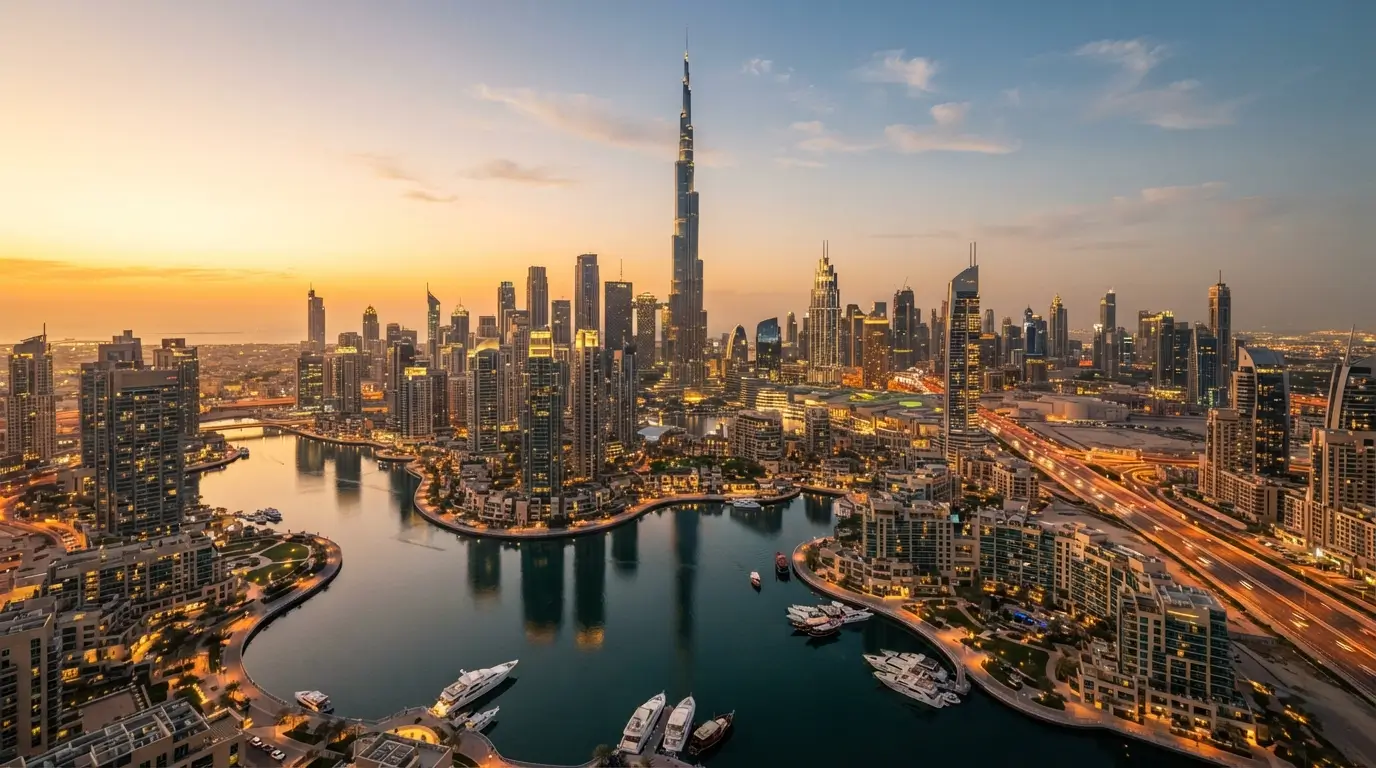
Why to Invest in Dubai Real Estate (2027)
The short answer to why to invest in Dubai real estate comes down to three things that most other major cities can’t offer together. There’s no annual property tax, no tax on rental income, and no capital gains tax when you sell. Add in rental yields that regularly beat London, New York, or Singapore, and a freehold system that lets foreigners own property outright in designated areas, and it’s easy to see why so much international money keeps flowing into this market.
I’ve spent years advising buyers through this market, walking sites before handover, comparing payment plans line by line, and watching which neighborhoods actually deliver on their promises versus which ones just photograph well. None of what follows is theory. It’s what I tell clients sitting across from me deciding whether to wire a deposit.
Why to Invest in Dubai Real Estate Right Now
Timing matters less than people think in a market this size, but a few current conditions do make Dubai worth a closer look. The population keeps growing as companies relocate regional headquarters here, which keeps rental demand steady in a way smaller markets can’t match. Infrastructure spending on transport, schools, and healthcare has kept pace with that growth rather than lagging behind it, which is the opposite of what happens in a lot of fast growing cities.
None of that guarantees returns. Markets move in cycles here just like anywhere else, and anyone telling you prices only go up hasn’t been watching long enough. What Dubai does offer is a structural setup, on the tax and ownership side, that simply isn’t available in most competing cities.
What Makes Dubai Different From Other Property Markets
No Tax on Rental Income or Capital Gains
This is usually the first thing that gets a client’s attention. Rental income you collect from a Dubai property isn’t taxed, and neither is the profit when you eventually sell. Compare that to a market where a chunk of your yield disappears every year to income tax before you even factor in capital gains on exit, and the math changes fast. There are still costs, service charges, agency fees, and a transfer fee when you buy or sell, but none of them come close to what an annual tax bill would take.
Rental Yields That Beat Most Global Cities
Gross yields on well chosen Dubai apartments regularly sit well above what you’d get on comparable properties in cities like London or Hong Kong, where yields have been squeezed for years by high entry prices relative to rent. That gap narrows for ultra luxury villas, where price per square foot climbs faster than rent does, so the yield advantage is strongest in the mid market apartment segment rather than the trophy properties that get the headlines.
Full Foreign Ownership in Freehold Areas
Dubai opened designated freehold zones to full foreign ownership years ago, and that list of areas has only grown since. You’re not leasing a long term right to use the property, you own the title outright, the same way a local buyer would. That’s a meaningful difference from markets where foreign buyers are restricted to leasehold structures or blocked from certain property types entirely.
Which Developers and Areas Are Actually Worth Looking At
This is where I spend most of my time with clients, because the brand on the building matters almost as much as the location. If you’re comparing developers before you commit, it’s worth reading through Dubai Guided’s breakdown of the top real estate companies in Dubai, which covers delivery track records rather than just marketing claims. A strong developer with a history of hitting handover dates protects your investment in ways a flashy render never will.
On location, I steer most first time investors toward established, already proven communities over brand new launches on the edge of the city. Established areas already have working infrastructure, existing tenant demand, and resale liquidity you can actually test by looking at recent comparable sales. Newer, far flung communities can offer a lower entry price, but you’re betting on infrastructure and demand catching up over several years, and that bet doesn’t always pay off on the timeline the sales brochure suggests.
What to Watch Out for Before You Buy
Payment plans deserve more scrutiny than most buyers give them. Some developers frontload payments heavily during construction, others push more of the balance to after handover, and that difference changes your cash flow planning significantly. Always confirm the project is registered with an escrow account through the Dubai Land Department before you transfer a deposit, since that’s what protects your money if construction stalls.
Service charges are the other detail people underestimate. A unit that looks cheap per square foot can turn into a mediocre investment once you factor in an unusually high annual service charge. Ask for the service charge history on the specific building, not just the developer’s general estimate, since actual charges often run higher than the number quoted at launch.
Who Dubai Real Estate Actually Suits
Not every investor profile fits this market equally well, and it’s worth being honest about that before you get too far into the process. Buyers chasing steady rental income tend to do best here, since the yield picture is strong and the tenant pool, expatriate professionals on renewable contracts, is large and fairly predictable. Buyers looking for a second home they’ll use a few weeks a year also do well, particularly in beachfront or golf course communities where short term rental demand covers the gap when the owner isn’t in town.
Where I get more cautious is with buyers expecting rapid, guaranteed capital appreciation on a tight timeline. Dubai has had strong growth cycles, but it’s also had periods of flat or falling prices, and anyone buying purely on the assumption of quick flips is taking on more risk than the marketing usually admits. Treat appreciation as a possible bonus on top of solid rental income, not the reason to buy in the first place.
Do You Need Help Managing the Property After You Buy?
If you’re buying from overseas or simply don’t want to chase tenants and handle maintenance calls yourself, a property management company earns its fee fast. Dubai Guided’s rundown of real estate management companies in Dubai is a useful starting point if you want to compare who actually handles leasing, maintenance, and tenant disputes rather than just collecting a management fee and doing the bare minimum.
For buyers planning to sell within a few years rather than hold long term, presentation matters more than people expect in a market this competitive. A well shot listing gets noticed faster and tends to close at a better price, which is worth keeping in mind whenever that stage of the plan comes around.
FAQs
Is Dubai real estate a good investment for foreigners?
Yes, in designated freehold areas foreigners can own property outright with full title, the same rights as a local buyer, which is a significant advantage over markets with leasehold restrictions.
How much rental yield can you expect in Dubai?
Gross yields on mid market apartments generally beat most major global cities, though the exact figure depends heavily on the specific building, area, and how well it’s managed.
Do you pay tax on Dubai property income?
No. There’s no tax on rental income and no capital gains tax when you sell, though buyers should still check their own home country’s tax obligations on foreign income.
What’s the minimum budget to invest in Dubai property?
Entry points vary widely by area and developer, with smaller studio and one bedroom units in emerging communities sitting well below what a comparable unit costs in an established central district.
Is off plan or ready property the better choice?
Off-plan often comes with a lower entry price and flexible payment plans, while ready property lets you see exactly what you’re buying and start earning rent immediately. Neither is automatically better, it depends on your risk tolerance and timeline.
How long does it take to buy property in Dubai?
A straightforward resale purchase can close within a few weeks once financing and paperwork are in order. Off plan purchases move faster upfront since you’re mainly signing a reservation and initial payment.
Can I get a residency visa by investing in Dubai property?
Property investment above a set value threshold can qualify a buyer for a long term residency visa, though the exact requirements and thresholds are worth confirming directly with a licensed immigration advisor before you commit.
Conclusion
The case for why to invest in Dubai real estate holds up well against most competing markets, mainly because of the tax structure, the ownership rights, and rental demand that keeps growing alongside the city itself. None of that replaces doing your own homework on a specific building, developer, and payment plan before you sign anything. Treat this as a starting framework, not a shortcut around due diligence, and you’ll be in a far stronger position than most first time buyers walking into a sales office.