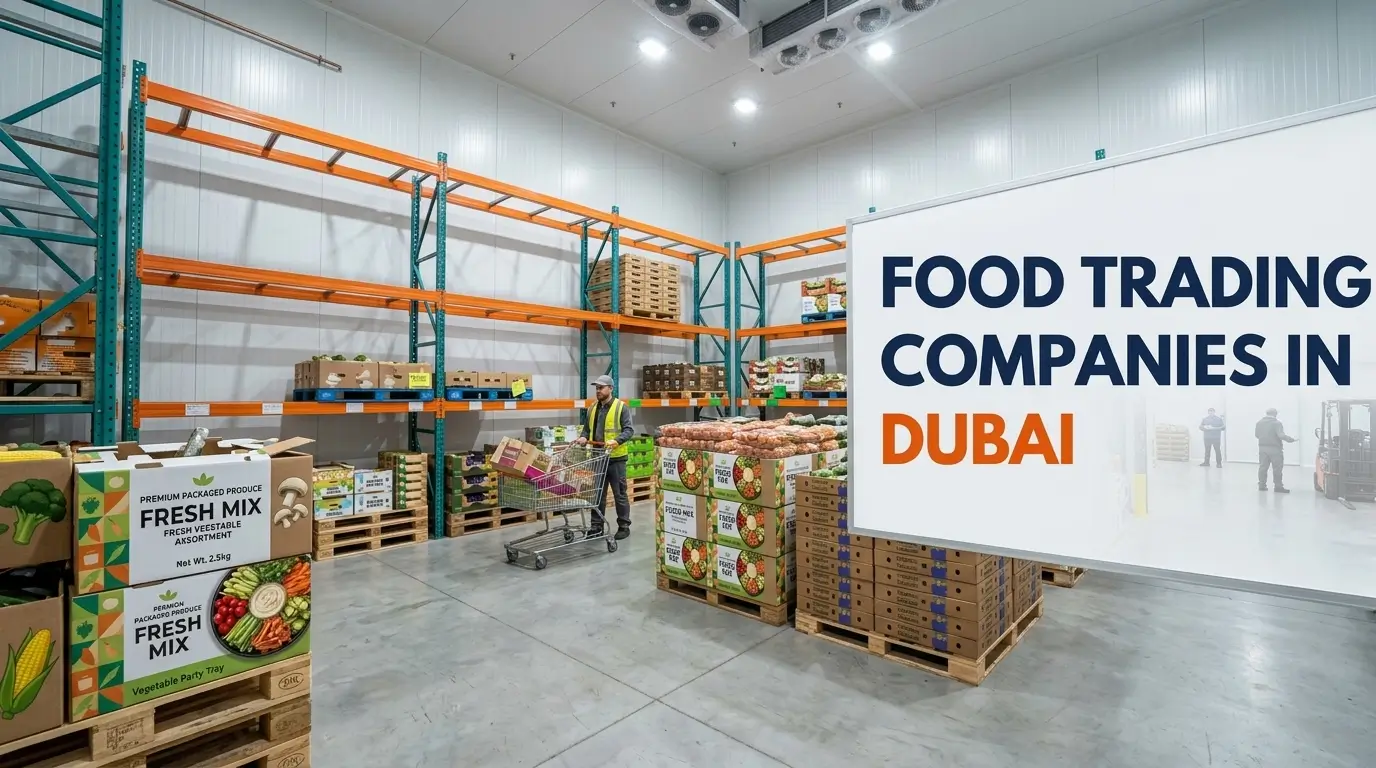
food trading companies in dubai
Food trading companies in Dubai import, distribute, and re export everything from rice and dairy to frozen meat and packaged snacks, supplying supermarkets, hotels, and wholesalers across the UAE and, in many cases, the wider Gulf and African markets too. Most operate out of free zones like DMCC or Jebel Ali, hold a general trading or foodstuff trading license, and work through Dubai’s ports because of how fast and reliable the customs process has become compared to most of the region.
I’ve spent years on the sourcing side of this industry, negotiating with suppliers, walking cold storage warehouses, and untangling paperwork when a shipment gets held at customs longer than it should. This isn’t theory pulled from a government brochure. It’s what actually happens once a container of frozen chicken or a pallet of canned tomatoes lands at Jebel Ali Port, and it’s shaped how I evaluate every one of the food trading companies in Dubai I’ve worked with since.
What Do Food Trading Companies in Dubai Actually Do?
At the core, food trading companies in Dubai buy food products from producers abroad, or occasionally within the UAE, and move them to buyers who need them, whether that’s a hypermarket chain, a hotel kitchen, or a distributor in another country entirely. Some specialize in a single category like frozen seafood or dairy. Others carry a broad catalogue covering grains, spices, oils, confectionery, and beverages under one roof.
The job isn’t just buying low and selling high. A serious trading company also handles cold chain logistics, halal certification where it applies, Dubai Municipality food safety approvals, and the customs documentation that keeps a shipment moving instead of sitting in a warehouse racking up storage fees. Get any one of those wrong and the margin on an otherwise good deal disappears fast.
Why So Many Food Trading Companies in Dubai Cluster Around Free Zones
Free zones exist for a reason beyond the tax benefits everyone talks about. DMCC, Jebel Ali Free Zone, and Dubai South all sit close to major ports and airports, which cuts transit time between arrival and delivery down to hours rather than days. Full foreign ownership, no currency restrictions, and streamlined licensing all matter too, but proximity to the port is honestly the detail that affects a trading company’s bottom line the most.
DMCC in particular has leaned into this by building out a dedicated food trade community, bringing traders, producers, and financing partners under one network. It’s not a single company, more an industry group, but it’s a useful sign of how seriously Dubai treats the food trading sector as a growth area rather than a side business.
A Few Established Names Worth Knowing
Al Maya Group has been distributing food and non food products across UAE retail since 1982, and its longevity says something about how it’s weathered several economic cycles that pushed weaker food trading companies in Dubai out of business entirely. Americana Group operates at a much larger scale, ranking among the biggest food manufacturing and distribution businesses in the wider Middle East rather than just the UAE.
Smaller, more specialized operators matter just as much in this space. Crescent General Trading, part of the wider Nikai Group and founded back in 1988, built its business around distributing specific packaged food brands into UAE retail. Jaipur Star General Trading, established in 2006, focuses on canned food, rice, pulses, and confectionery aimed at hypermarkets, hotels, and wholesalers across the Middle East and African markets. Neither name is a household one outside the trade, but both show up constantly once you start looking at who actually supplies UAE shelves.
What Kinds of Products Move Through These Companies
Rice, pulses, and grains make up a huge share of volume, largely because the UAE imports nearly all of what it consumes. Frozen meat and seafood follow close behind, given how strict the cold chain requirements are and how much specialized handling that category demands. Dairy, canned goods, spices, snacks, and beverages round out most catalogues, and a growing number of food trading companies in Dubai have added organic and health focused ranges as demand from residents shifts.
How Payment and Shipping Terms Usually Work
Most food trading companies in Dubai work on letters of credit for larger first time orders, moving to open account terms once a buyer and supplier have built up trust over a few transactions. Shipping terms typically follow standard international trade rules, with the trading company handling everything from the port of origin through customs clearance at Jebel Ali or another UAE entry point. Smaller buyers sometimes assume they need to arrange their own freight forwarding, but most established suppliers already have that built into their service and simply fold it into the quoted price.
If you’re researching the wider business landscape rather than just the food side, it’s worth browsing Dubai Guided’s business category, which covers company formation, licensing, and the practical side of setting up shop in the UAE beyond just food.
Licensing, Certification, and What Buyers Should Check
Not every company calling itself a trading firm holds the right paperwork for food specifically. A general trading license doesn’t automatically cover foodstuff activities in every free zone, so it’s worth confirming a supplier holds an actual foodstuff trading license rather than assuming a broad license covers it. Halal certification matters for a large share of buyers too, and it should come from a recognized certifying body rather than a printed logo with no paperwork behind it.
Dubai Municipality inspects and approves food warehouses and cold storage facilities, so asking to see that approval, along with recent inspection records, tells you more about a company’s reliability than any glossy catalogue ever could. I always ask new suppliers for their food safety certificate before discussing pricing, not after.
How to Choose Between Competing Food Trading Companies in Dubai
Price matters, obviously, but it shouldn’t be the only filter. I look at how a company handles a problem shipment before I look at their price list, because a supplier who ghosts you the moment something goes wrong at customs isn’t worth the small savings on unit cost. Ask for references from existing UAE clients, not just international ones, since local retail relationships reveal a lot about day to day reliability.
It also helps to visit the warehouse in person if you can, rather than relying entirely on photos or a video call. Storage temperature, stock rotation, and general cleanliness tell you within minutes whether a company takes food safety seriously or just talks about it in their marketing. The most reliable food trading companies in Dubai are usually happy to arrange a warehouse visit without hesitation, while the ones worth avoiding tend to find excuses to delay it.For anyone comparing broader UAE dining and food coverage alongside the trading side of the industry, Dubai Guided’s food section tracks restaurant trends and consumer habits that often explain why certain product categories move faster through Dubai’s trading companies than others.
FAQs
What license do food trading companies in Dubai need?
Most need a foodstuff trading license, issued either through a free zone authority or Dubai’s Department of Economy and Tourism for mainland operations, alongside relevant health and municipality approvals.
Can a foreigner fully own a food trading company in Dubai?
Yes. Free zone registration allows full foreign ownership, and mainland rules have also opened up significantly for most trading activities in recent years.
Do food trading companies in Dubai need halal certification?
Not always, but it’s required for meat and poultry products and expected by most retail buyers even for categories where it isn’t strictly mandatory.
How long does customs clearance usually take?
For properly documented shipments through Jebel Ali or other major UAE ports, clearance often happens within a day or two, though perishable goods are typically prioritized.
What’s the difference between a distributor and a food trading company?
A trading company usually imports and sells in bulk to distributors, retailers, or wholesalers, while a distributor focuses on getting those same products onto shelves and into individual outlets. Many food trading companies in Dubai actually perform both roles at once, depending on the client.
Is Dubai a good base for exporting food to other countries?
Very much so. Its port infrastructure and free zone network make it a common re export hub for food heading to Africa, the wider Gulf, and parts of Asia.
Conclusion
The food trading sector in Dubai runs on relationships, paperwork, and logistics as much as it runs on price. The best food trading companies in Dubai treat certification and cold chain handling as seriously as they treat their profit margins, and that discipline is usually what separates a supplier you can build a long term relationship with from one that causes headaches after the first shipment. Do the homework before you sign anything, and the rest of the process tends to go a lot more smoothly.